Gutter Guard Questions for La Crosse Homes Surrounded by Trees
If you live in La Crosse and your roofline sits under branches, gutter questions tend to come up fast. Not abstract questions, either. Real ones. Will guards actually keep pine needles out? Will oak leaves still turn into a soggy mat on top of the guard? Will water shoot over the edge in a hard summer storm? And is a guard worth it if you still have to get up there and clean?
Those are fair questions, especially in this part of Florida. Heavy rain can arrive in a hurry during the summer rainy season and tropical storm season. Humidity stays high, debris breaks down quickly, and clogged gutters can go from minor nuisance to overflowing mess in one afternoon. That is why Florida storm prep guidance puts so much emphasis on clearing needles, leaves, and other debris from roofs and gutters. It is also why the right answer for one house is not always the right answer for the next one, even on the same road.
What follows is the kind of conversation I would have with a homeowner standing in the driveway, looking up at a roof shaded by oaks and pines, trying to decide whether gutter guards will solve the problem or simply change the kind of maintenance the house needs.
The first thing to know, guards do not replace maintenance
This is the point that saves people the most frustration. Gutter guards can reduce the amount of debris that gets inside the gutter trough, but they do not make the system maintenance-free. In a tree-heavy yard, they usually change the maintenance pattern instead of eliminating it.
Without guards, leaves, pine needles, seed pods, and roof grit drop directly into the gutter. With guards, some of that material stays on top, some blows off, some clumps at roof edges, and some still works its way into openings depending on the guard style and the type of debris falling on the house. Pine needles are the classic example. They are thin, flexible, and persistent. They can bridge across openings, collect in corners, and build a shallow mat that slows water before it ever reaches the gutter.
That matters because Florida rain often arrives in intense bursts. A gutter system can be perfectly fine on a mild shower and still struggle when debris is holding water back during a hard downpour. Summer storms are not gentle tests. They reveal every weak point at once.
The debris on your lot matters more than the sales pitch
When homeowners ask me whether gutter guards work, I usually turn the question around. Work against what?
If your biggest issue is broad leaves from nearby trees, some guards do a decent job of reducing interior buildup. If your biggest issue is pine needles, catkins, small twigs, and the fine roof grit that rides along with humid weather and storms, you need to be much more careful. The phrase gutter guards for pine needles Florida gets searched for a reason. Needle-heavy roofs are hard on every system.
Oak debris brings its own trouble. Leaves can mat down, and acorns or small fragments can create choke points around outlets. Florida guidance on stormwater is clear that leaf litter and yard debris should be kept out of gutters and storm drains. That is not just about protecting your home. It also helps keep organic debris from washing into the broader drainage system.
A wooded property in La Crosse often means mixed debris rather than a single clean problem. You may have pine needles on one slope, oak leaves in a valley, and twigs gathering around the downspout outlet after every windy afternoon. In that situation, a guard should be judged less by the promise on the box and more by how easy it leaves the system to inspect and clean.
Overflow matters as much as clogging
A lot of homeowners focus on whether the gutter clogs. That makes sense, but overflow is just as important.
A guard can keep the gutter trough cleaner and still fail during a fast storm if water cannot enter efficiently enough. This becomes a bigger concern under valleys, below long roof runs, and anywhere one section of roof dumps into another. Florida building requirements also make it clear that gutters and downspouts must be sized and discharged according to code. So the guard question cannot be separated from the broader system. If a house has undersized gutters, too few downspouts, or poor downspout discharge, a guard alone may only mask the real issue for a while.
That is where conversations about gutter sizes for Florida homes become useful. Bigger is not always necessary, but volume matters when you have intense rain and tree debris at the same time. A guard installed over a marginal gutter system can create a false sense of security. The water still has to enter, travel, and discharge somewhere.
Your existing gutter shape and material affect the answer
Not every guard fits every gutter equally well, and not every older gutter is worth outfitting.
Many Florida homes use K-style profiles, so if you have looked into K-style gutters Lady Lake FL or similar regional service pages, you have probably seen how common that shape is. It handles a lot of roofline applications well, and there are many guard products designed around it. That said, a guard should not be installed over loose, poorly pitched, or deteriorating gutters just because the profile is compatible.
Material matters, too. Aluminum gutters Central Florida homeowners choose are common for practical reasons. They are widely used, relatively light, and appropriate for many houses when properly fastened. Florida code language also points to metal or approved plastic gutters and leaders that are securely fastened with corrosion-resistant fasteners. In plain English, the basic structure has to be solid. If the fasteners are failing or sections are separating, adding a guard can make inspection harder while the underlying problem gets worse.
I have seen homeowners spend good money on guards when what they really needed was localized gutter repair Wildwood FL style, meaning a practical repair approach: tighten what is loose, correct pitch where water sits, reseal where needed, and make sure the downspout path is clear. Once the system itself is working, then the guard conversation becomes more useful.
The downspouts often decide whether a guard helps
A surprising number of gutter problems are really downspout problems.
You can have a fairly clean gutter trough, but if the outlet is restricted or the downspout discharge is poor, water backs up and overflows anyway. That is why I pay close attention to downspout drainage Newberry FL type concerns whenever a homeowner says, “The gutters have guards, so I don’t understand why water is pouring over the side.”
The reasons are usually straightforward. Debris can collect at the outlet opening below the guard. Organic buildup can accumulate inside the downspout elbow. Splash blocks may be misplaced. Water may be discharging too close to the house or into an area that already stays saturated. Summer conditions also speed up organic buildup, which is why maintenance guidance for stormwater systems stresses cleaning gutters and downspouts as needed and removing buildup, especially in summer.
For homes surrounded by trees, I would rather have a simpler guard and accessible downspouts than a complicated guard system that makes outlet inspection difficult.
The best question is not “Which guard is best?” but “What problem am I solving?”
That shift in thinking helps people avoid overspending.
Sometimes the problem is safety. The homeowner is tired of climbing a ladder for frequent gutter cleaning Fruitland Park FL style maintenance and wants to cut down the number of times they have to get up there. That is reasonable.
Sometimes the problem is storm readiness. The owner wants storm ready gutters Florida homeowners can count on when heavy rain arrives after a week of falling leaves and needles.
Sometimes the problem is replacement timing. The old system is nearing the end, and the owner is deciding whether to pair guards with seamless gutters Ocala FL type installations or to wait.
Each of those situations points to a different answer. A person trying to reduce cleaning frequency may accept some visible debris on top of the guard. A person worried about overflow at roof valleys may prioritize water intake performance over appearance. A person already planning gutter replacement Gainesville FL level work should evaluate the whole assembly together instead of treating the guard as a separate add-on.
What I would inspect before recommending a guard
Before I would give a strong yes or no, I would want to look at a handful of basic conditions.
- The type of tree debris hitting the roof, especially whether pine needles, oak leaves, or acorns dominate.
- The roof layout, including long runs, valleys, and any spot where water concentrates.
- The current gutter condition, including pitch, fasteners, seams, and outlet performance.
- The downspout discharge path, because clean gutters still fail if water cannot move away effectively.
- The homeowner’s tolerance for ongoing maintenance, since no guard removes that entirely.
That short list sounds simple, but it usually tells the story. A low-slope section under pines behaves differently from a steep open run with occasional leaf drop. A new gutter system behaves differently from an older one that already sags. The right recommendation comes from matching the guard approach to the house, not the other way around.
Guards can help, but they work best as part of a larger maintenance plan
This is where expectations need to stay realistic. A guard is one piece of the system.
You still need to keep the roof surface reasonably clear in tree-heavy rain gutters in North Florida conditions. You still need periodic checks after storms. You still need to make sure leaf litter and yard debris are not washing toward storm drains or piling up around discharge areas. Florida guidance encourages using fallen leaves and pine needles on-site as mulch rather than letting them wash away. That is a smart habit around the whole property, not just the gutter line.
One homeowner I spoke with described their old routine perfectly. Before guards, they cleaned the inside of the gutters often but ignored the roof edge. After guards, they cleaned less often overall, but they had to pay more attention to what was collecting on top of the system and around valleys. That is a normal trade-off. The labor may drop, but inspection becomes more important.
Seamless systems and guards often make sense together, but not always
When people are already replacing gutters, the conversation gets easier. If you are considering seamless gutters Ocala FL style options or any similar custom-fit system, that is the right time to think through guard compatibility, downspout count, and discharge locations. It is usually more efficient to solve those issues at once rather than retrofit piece by piece later.
Still, a new seamless system is not automatically the answer. If the current gutters are structurally sound and the real issue is localized debris concentration, a targeted fix may be enough. Other times, an older system has enough wear that adding guards feels like putting a screen door on a shed with a bad foundation. You can do it, but it does not solve the larger problem.
This is why honest contractors sometimes talk people out of add-ons. It is not glamorous advice, but it is often the right advice.
Common questions I hear from tree-covered properties
Homeowners in wooded areas tend to ask versions of the same few questions, though the details vary from house to house.
“Will guards stop me from ever cleaning again?” No. They may reduce how often interior cleaning is needed, but periodic maintenance remains part of ownership.
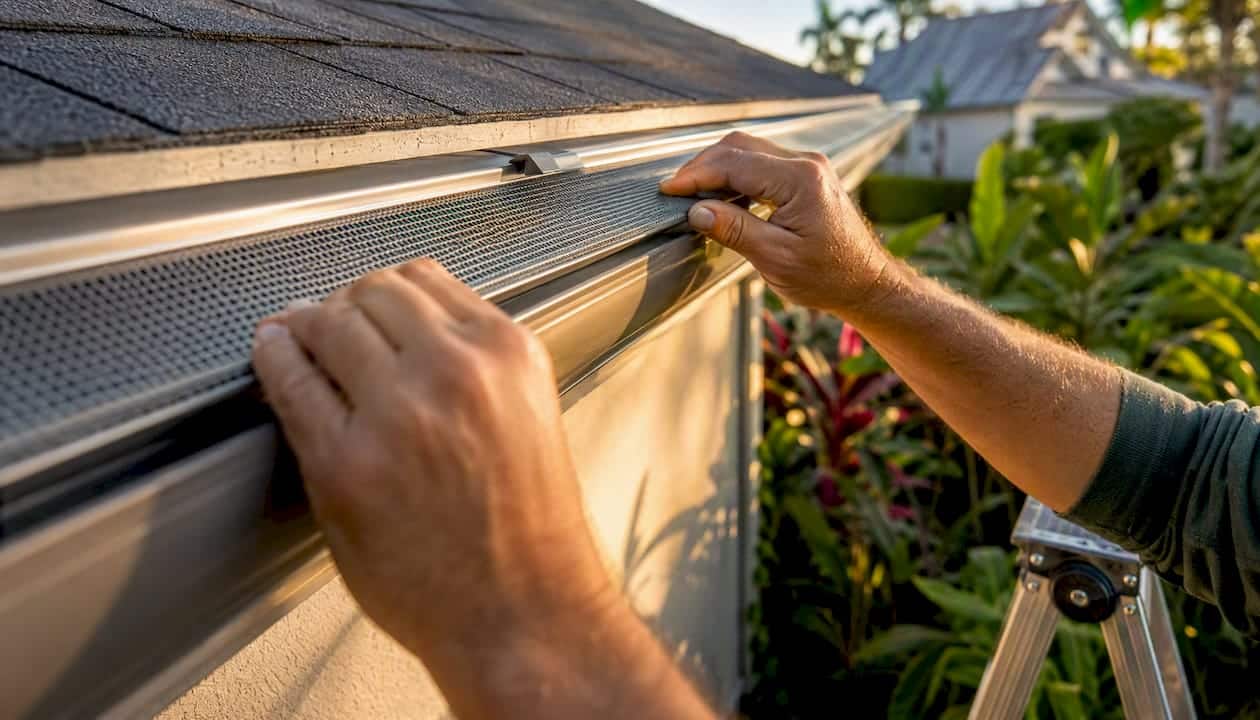
“Are guards worth it for pine needles?” Sometimes, but pine-heavy sites are the hardest test. The result depends on how the debris falls, how much wind exposure the roof gets, and whether the guard design allows needles to accumulate on top or slip into openings.
“Should I install guards on old gutters?” Only if the existing system is in good enough shape to justify the expense. Loose, poorly draining, or undersized gutters need attention first.
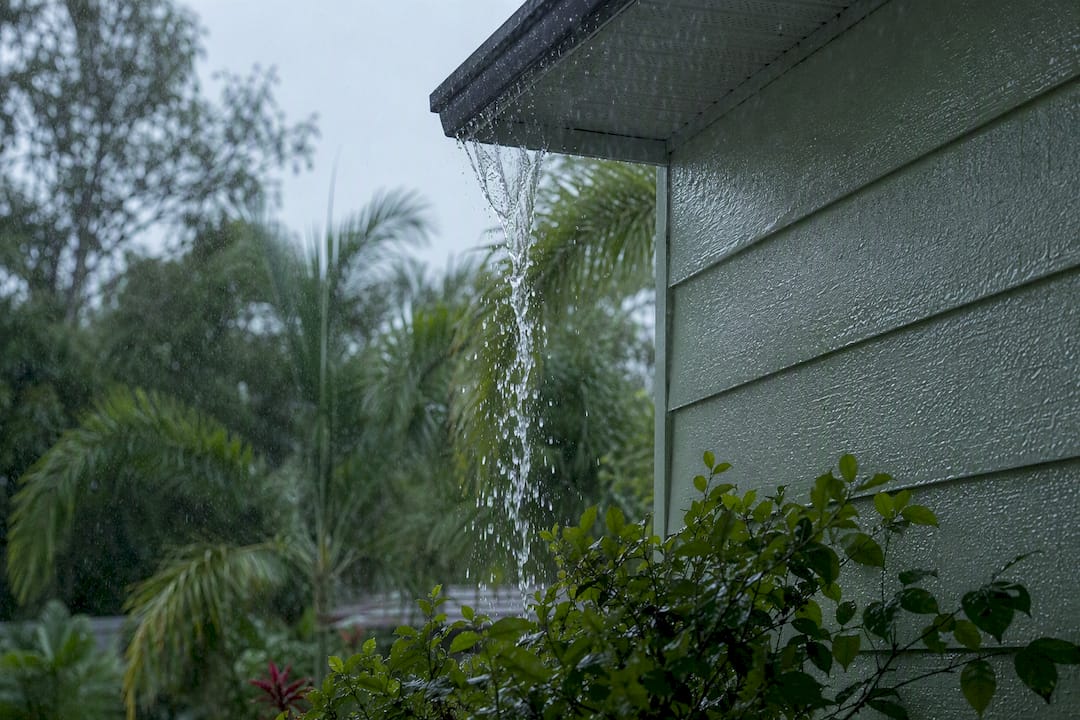
“Why do my gutters overflow if they seem clean?” Usually because the issue is water entry during heavy rain, outlet restriction, downspout blockage, or discharge problems, not obvious trough debris.
“Do bigger gutters solve everything?” Not by themselves. Capacity matters, especially during intense Florida rain, but the whole path from roof edge to final discharge has to work.
When repair makes more sense than replacement
This is the kind of judgment call homeowners appreciate because it protects the budget.
If the gutter sections are basically sound, the metal is in decent shape, and the system mostly works aside from a few trouble spots, repair can be the smarter move. Refastening loose areas, correcting pitch, clearing outlets, and adjusting discharge can restore a lot of performance. In that scenario, adding guards selectively may also make sense if debris is worst on only one side of the house.
If, however, the gutters have widespread sagging, repeated leaks, failing connections, or chronic overflow tied to overall sizing, then replacement becomes easier to justify. The phrase gutter replacement Gainesville FL shows up often because homeowners eventually reach that point where repeated patchwork is no longer saving money. They are just spending it slowly.
The challenge is knowing which camp your house falls into. That is where a careful site inspection matters more than any generic sales brochure.
Hiring the right contractor matters as much as the product
A guard system is only as good as the installation and the judgment behind it. If you are hiring a gutter contractor Florida homeowners would trust with a tree-heavy property, I would focus less on the flashiest product claim and more on whether the contractor asks good questions.
Do they look at downspouts, not just the gutter face? Do they talk about storm flow and debris type? Do they discuss whether your current gutters are worth keeping? Do they explain maintenance honestly instead of promising a no-clean solution? Those are the signs you are talking to someone who understands the work.
A contractor who works thoughtfully in wooded areas should also respect the fact that debris management is part of storm prep. Needles, leaves, and organic buildup do not just disappear because a guard was added. They have to be cleared, redirected, or managed on site in a responsible way.

What I would tell a La Crosse homeowner standing under a canopy of trees
If your house is surrounded by trees, gutter guards can absolutely be useful. They can cut down on interior clogs, reduce the frequency of messy cleanouts, and help the system stay more functional between maintenance visits. But they are not magic, and they are not all equal under pine and oak cover.
The house has to be considered as a system. Gutter size, gutter profile, downspout capacity, discharge path, roof geometry, and debris type all matter. That is especially true in Florida, where hard summer rain can expose weaknesses quickly. A guard that looks fine in dry weather can disappoint fast when water volume spikes.
So if you are deciding whether to install guards, ask a narrower and more useful question: will this specific guard, on this specific house, reduce the problems I actually have without creating new ones I will dislike more? That is the question that leads to good decisions.
For some La Crosse homes, the answer will be yes, especially if the existing gutters are solid and the main goal is reducing routine cleaning. For others, the better investment may be repair first, replacement second, guards last. And for a few properties with relentless needle fall and tricky rooflines, the right answer may be a simpler system that stays easy to inspect and service.
That may not be the neatest sales answer, but it is the honest one. And honest answers hold up better than clogged gutters in a Florida storm.